
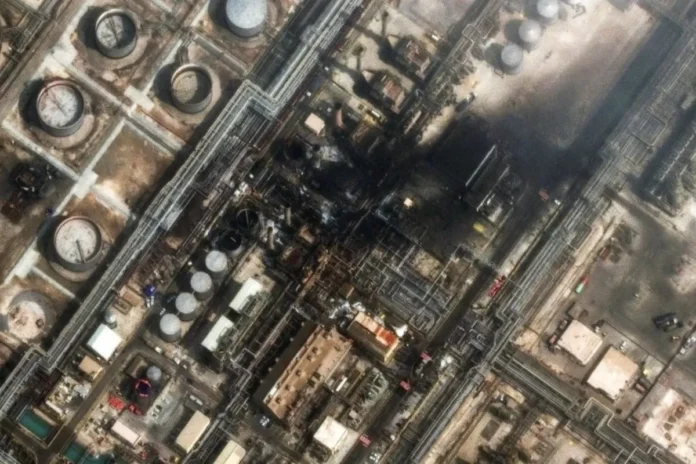
Satellite Images Reveal Damage from Iranian Drone Attack on Ras Tanura Refinery, Raising Fears of Middle East Conflict and Energy Turmoil
Recent satellite images have shown the extent of damage caused by an Iranian drone attack on the Ras Tanura refinery in Saudi Arabia, disrupting operations and raising concerns about the stability of the region’s energy supply. The attack, which occurred in the early hours of Sunday, has once again highlighted the growing tensions between Iran and its regional rivals, and has sent shockwaves through the global energy market.
The satellite images, released by the commercial firm Maxar Technologies, show several blazes at the refinery, with thick black smoke billowing into the sky. In addition, there is visible damage to oil storage tanks and pipelines, indicating the severity of the attack. The images also reveal the precision and sophistication of the attack, with the drones hitting specific targets within the refinery.
The Ras Tanura refinery, owned by the state-owned Saudi Aramco, is one of the world’s largest oil refineries, with a capacity of processing 550,000 barrels of oil per day. It is also a vital storage and distribution hub for the country’s oil exports, making it a prime target for any disruption to the region’s energy supply.
The drone attack is the latest in a series of incidents between Iran and its regional rivals, including Saudi Arabia and Israel. Tensions have been high since the US withdrew from the 2015 nuclear deal and reimposed sanctions on Iran, leading to a standoff between the two powers. The recent attack on the Ras Tanura refinery is seen as a retaliation for the US airstrike in Syria last month, which targeted Iranian-backed militia groups.
The attack has already had a significant impact on the global energy market, with oil prices rising as a result of the disruption to the refinery’s operations. The fear of further escalation in the region has led to concerns about the stability of the global energy supply, which heavily relies on the Middle East for its oil.
The United States, along with its allies, has condemned the attack and called for an immediate de-escalation of tensions in the region. US Secretary of State Antony Blinken stated that “Iran’s actions are unacceptable and a threat to peace and stability in the Middle East”, while also reaffirming the US’s commitment to defending its allies in the region.
Furthermore, the attack has raised concerns about the potential for a wider conflict in the Middle East, which could have disastrous consequences for the global economy. According to analysts, a prolonged conflict in the region could lead to a significant increase in oil prices, which would have a ripple effect on other industries and could potentially slow down the post-pandemic economic recovery.
In response to the attack, Saudi officials have promised to do everything in their power to restore operations at the Ras Tanura refinery and ensure the safety and stability of the country’s energy supply. The kingdom has also called on the international community to hold Iran accountable for its actions and urged the UN to take immediate action to address the growing threat posed by Iranian-backed militias in the region.
The attack on the Ras Tanura refinery serves as a reminder of the ongoing tensions in the Middle East and the fragile nature of the region’s energy supply. It is imperative that all parties involved work towards de-escalation and find a peaceful resolution to the conflict. Any further attacks or escalation could have catastrophic consequences for not only the involved countries but also the global community as a whole.
Despite the disruption and fear caused by the Iranian drone attack on the Ras Tanura refinery, there is still hope for a peaceful resolution to the ongoing tensions in the region. With the support of the international community and a determination to find a diplomatic solution, we can prevent any further destabilization and maintain the stability of the global energy market. Let us work together towards a peaceful and prosperous future for all.