
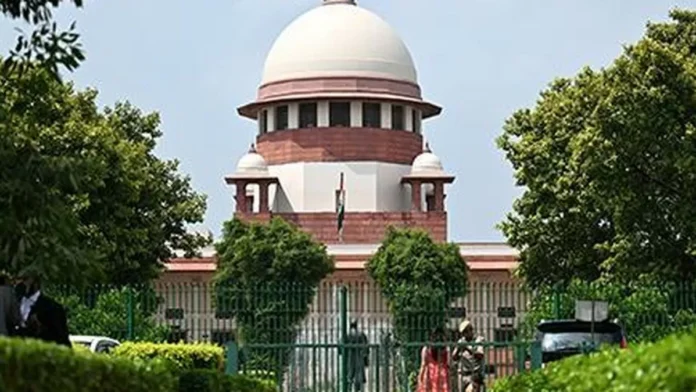
The Supreme Court of India has recently made a statement that has raised eyebrows and sparked debates across the country. In a recent hearing, the apex court has pointed out that many states in India are running in deficit, yet they seem to have enough funds for extravagant spending. This observation by the court has once again brought to light the issue of financial mismanagement by state governments.
The term “deficit” refers to a situation where a government’s expenses exceed its revenue. In simpler terms, it means that the state is spending more money than it is earning. This is a cause for concern as it can lead to a financial crisis and affect the overall development of the state. The Supreme Court’s statement has highlighted the fact that despite being in a deficit, many states are still indulging in lavish spending, which raises questions about their financial prudence.
One of the main reasons for this situation is the lack of proper budget planning and execution by state governments. The budget is a crucial tool for any government to manage its finances and allocate funds for various developmental projects. However, many states have been found to have unrealistic budgets, with inflated revenue projections and underestimated expenses. This leads to a situation where the state is unable to generate enough revenue to cover its expenses, resulting in a deficit.
Moreover, the lack of accountability and transparency in the utilization of funds has also contributed to this problem. Many state governments have been accused of misusing funds and diverting them for personal or political gains. This not only leads to a deficit but also hinders the progress of important projects and schemes that are meant for the welfare of the people.
The Supreme Court’s observation has also shed light on the issue of populism in state governments. In a bid to appease the masses and gain political mileage, many state governments resort to doling out freebies and subsidies, even if it means going into a deficit. This short-sighted approach may seem beneficial in the short term, but it has long-term consequences for the state’s financial health.
It is essential for state governments to understand that running in a deficit is not a sustainable solution. It can have severe repercussions, such as inflation, increased borrowing, and a negative impact on the state’s credit rating. This, in turn, can affect the state’s ability to attract investments and lead to a slowdown in economic growth.
The Supreme Court’s statement has also highlighted the need for better financial management and fiscal discipline by state governments. It is imperative for them to prioritize their expenses and focus on essential sectors such as education, healthcare, and infrastructure. They must also explore alternative sources of revenue generation, such as increasing taxes or reducing unnecessary expenditures.
The central government also has a crucial role to play in this matter. It must ensure that state governments adhere to fiscal responsibility and accountability norms. It can also provide financial assistance and guidance to states that are struggling with deficits.
In conclusion, the Supreme Court’s observation on states running in deficit despite having funds for largesse is a wake-up call for state governments. It is high time they take a more responsible and prudent approach towards managing their finances. The focus should be on sustainable development and not on short-term gains. Only then can we hope for a financially stable and prosperous India.