
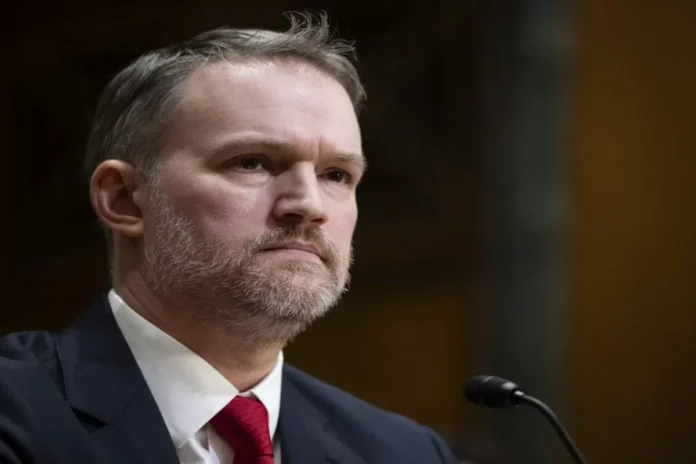
US Trade Representative Jamieson Greer has recently made a bold statement, positioning India as a key alternative to China in terms of trade. In a time where the trade war between the United States and China has caused uncertainty and disruption in the global market, this news comes as a ray of hope for both American workers and exporters.
In a recent interview, Greer highlighted India’s potential as a major trade partner for the United States. He emphasized the need for a “two-way street” in trade, where both countries benefit equally. This statement not only reflects the current administration’s focus on balancing trade deficits, but also showcases the potential for a mutually beneficial relationship between the two countries.
India, with its rapidly growing economy and large consumer base, has always been an attractive market for American businesses. However, in the past, trade between the two countries has been hindered by various obstacles such as high tariffs, non-tariff barriers, and bureaucratic red tape. Greer acknowledged these challenges but also expressed his confidence in the Indian government’s efforts to improve the ease of doing business in the country.
One of the major concerns for the United States has been the trade deficit with India, which stood at $21.3 billion in 2019. However, Greer believes that this can be addressed by increasing American exports to India. He stated that India’s growing middle class and their increasing demand for quality American products presents a huge opportunity for US exporters. This sentiment is echoed by many American companies who see India as a potential market for their goods and services.
In addition to the economic benefits, Greer also highlighted India’s strategic importance in the region. With China’s growing influence and assertiveness, the United States is looking to strengthen its ties with other Asian countries. India, being the world’s largest democracy and a key player in the Indo-Pacific region, is seen as a natural ally for the US. This is evident in the recent joint military exercises and defense deals between the two countries.
Moreover, India’s commitment to economic reforms and its growing role in global trade organizations such as the World Trade Organization (WTO) and the G20, further solidifies its position as a key player in the global economy. Greer also praised India’s efforts in promoting a rules-based trading system and its commitment to protecting intellectual property rights, which are crucial for American businesses.
However, for this potential to be realized, both countries need to work together to address the existing trade barriers. Greer emphasized the need for India to open up its market to American goods and services, while also addressing the concerns of American companies regarding market access and intellectual property protection. He also stressed the importance of a level playing field for American workers, who have been adversely affected by unfair trade practices in the past.
It is heartening to see the US Trade Representative acknowledging India’s potential as a key trade partner. This not only reflects the growing economic ties between the two countries but also highlights the shared values and common interests that bring them together. The United States and India have a long history of cooperation and partnership, and this recent development only strengthens their relationship.
As the world looks towards a post-pandemic recovery, it is crucial for countries to come together and build a resilient and inclusive global economy. The United States and India have a unique opportunity to lead this effort, and with a strong commitment from both sides, there is no doubt that this partnership will bring immense benefits for both countries and their people.
In conclusion, the US Trade Representative’s statement positions India as a key alternative to China, provided that trade between the two countries remains a “two-way street” for American workers and exports. This presents a promising opportunity for both countries to strengthen their economic ties and work towards a more balanced and mutually beneficial trade relationship. With the right efforts and collaboration, the United States and India can pave the way for a prosperous and stable global economy.