
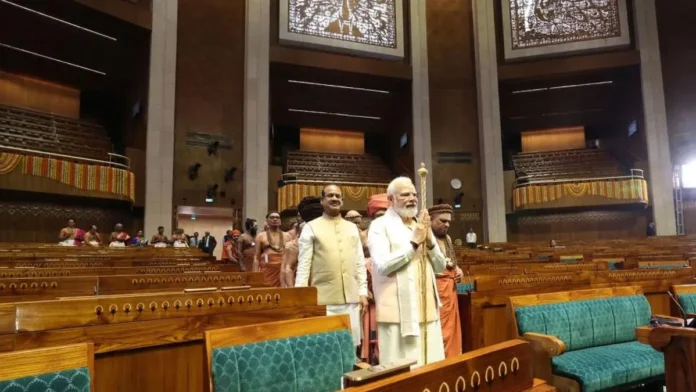
In a move towards greater efficiency and transparency, the Indian Parliament has recently announced a change in its attendance system. The new system aims to save time and ensure genuine participation, as some Members of Parliament (MPs) have been found to mark their attendance without actually attending the proceedings. This change is a positive step towards improving the functioning of our democracy and strengthening the trust of the people in their elected representatives.
The Indian Parliament is the cornerstone of our democratic system, where laws are debated, policies are formed, and the voices of the people are heard. However, in recent times, there have been concerns raised about the attendance of MPs during parliamentary sessions. It has been observed that some MPs have been marking their attendance without actually being present in the House. This not only wastes precious time but also raises questions about the sincerity and commitment of our elected representatives.
To address this issue, the Parliament has decided to introduce a new attendance system. Under this system, MPs will be required to scan their fingerprints to mark their attendance. This will ensure that only those MPs who are physically present in the House will be marked as present. This change will not only save time but also ensure genuine participation of MPs in the proceedings.
One of the major advantages of this new system is that it will eliminate the possibility of proxy attendance. In the past, there have been instances where MPs have asked their colleagues to mark their attendance on their behalf. This not only goes against the principles of democracy but also undermines the trust of the people in their elected representatives. With the introduction of the fingerprint scanning system, such malpractices will be curbed, and the attendance records will accurately reflect the actual participation of MPs.
Moreover, this change will also bring about greater accountability among MPs. By scanning their fingerprints, MPs will be held responsible for their attendance and participation in the parliamentary sessions. This will encourage them to be more punctual and actively participate in the debates and discussions, which are crucial for the smooth functioning of our democracy.
The new attendance system is also a step towards digitization and modernization of the Parliament. In today’s fast-paced world, it is imperative to adopt technology to improve the efficiency of our institutions. The fingerprint scanning system is a step in the right direction and will bring the Indian Parliament at par with other advanced democracies.
Furthermore, this change will also benefit the taxpayers who fund the functioning of the Parliament. With the new system in place, the time wasted due to proxy attendance will be reduced, and the Parliament will be able to utilize its time more effectively. This will lead to better utilization of public funds and ultimately benefit the citizens of the country.
It is heartening to see that the Indian Parliament is taking proactive steps to address the issue of attendance and participation of MPs. This change is a reflection of the commitment of our leaders towards strengthening our democracy and ensuring the smooth functioning of our Parliament.
In conclusion, the introduction of the fingerprint scanning system for marking attendance in the Indian Parliament is a welcome move. It will save time, ensure genuine participation, and bring about greater accountability among MPs. This change is a step towards a more efficient and transparent functioning of our democracy. Let us hope that this change will inspire our elected representatives to actively participate in the proceedings and fulfill their duties towards the nation and its people.