
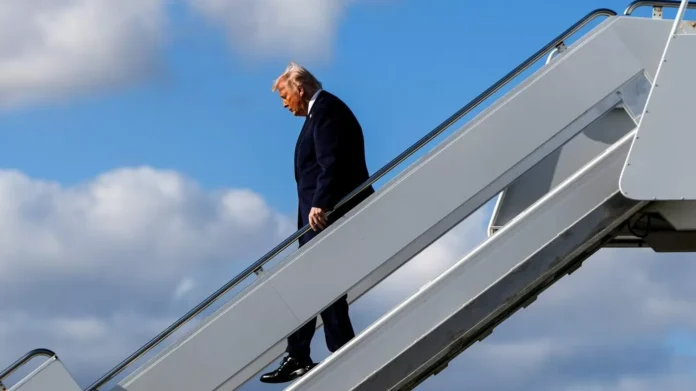
President Trump is set to attend the World Economic Forum in Davos, Switzerland this week, where he will come face-to-face with European allies. However, the atmosphere may be tense as tensions have been building on both sides of the Atlantic over Trump’s recent insistence on the U.S. acquiring Greenland. This move has caused a rift between the U.S. and its European allies, particularly Denmark, which has resulted in the imposition of 10 percent tariffs on the country and its European counterparts.
The decision to impose tariffs on Denmark and its European allies has been met with mixed reactions. While some see it as a necessary step to pressure them into negotiations over the future of Greenland, others view it as a reckless and damaging move that could harm the strong relationship between the U.S. and its European allies.
President Trump’s interest in acquiring Greenland has been met with surprise and confusion by many. The autonomous Danish territory, which is home to only 56,000 people, has been a part of Denmark since the 18th century and is not for sale. However, this has not stopped Trump from expressing his desire to purchase the island, which he believes has valuable natural resources and strategic importance.
The tensions between the U.S. and its European allies have been further exacerbated by Trump’s recent comments about the European Union. In an interview with Fox News, Trump criticized the EU for being “worse than China” when it comes to trade and accused them of taking advantage of the U.S. He also threatened to impose tariffs on European cars if the EU does not agree to a trade deal.
These developments have raised concerns about the future of transatlantic relations and the unity of the Western alliance. The U.S. and Europe have long been strong allies, with shared values and interests. However, Trump’s unconventional approach to foreign policy has strained this relationship and caused divisions among traditional allies.
The World Economic Forum in Davos provides an opportunity for Trump to address these tensions and work towards finding common ground with his European counterparts. It is a platform for global leaders to come together and discuss pressing issues facing the world, including trade and economic cooperation.
Despite the current tensions, it is important to remember that the U.S. and Europe have a long history of working together and overcoming challenges. The U.S. has been a strong supporter of European integration and has played a crucial role in promoting peace and stability in the region. It is in the best interest of both sides to find a way to resolve their differences and continue their strong partnership.
Moreover, the World Economic Forum is not just about political discussions, but also about promoting economic growth and cooperation. The U.S. and Europe are major players in the global economy and have a lot to gain from working together. By focusing on areas of mutual interest, such as trade and investment, both sides can benefit and strengthen their relationship.
In addition, the U.S. and its European allies share many common challenges, such as climate change, terrorism, and global security. These issues require cooperation and coordination between nations, and the World Economic Forum provides a platform for leaders to discuss and find solutions to these pressing issues.
President Trump’s attendance at the World Economic Forum is an opportunity for him to demonstrate his commitment to global cooperation and address the concerns of his European allies. It is also a chance for him to showcase the strength and resilience of the U.S. economy and its role in the global market.
In conclusion, the tensions between the U.S. and its European allies over the acquisition of Greenland and trade disputes are a cause for concern. However, the World Economic Forum in Davos presents an opportunity for both sides to come together and find common ground. It is important for all parties to approach these discussions with an open mind and a willingness to work towards a mutually beneficial solution. The U.S. and Europe have a long-standing relationship that should not be jeopardized by short-term disagreements. Let us hope that this meeting will pave the way for a stronger and more united transatlantic alliance.