
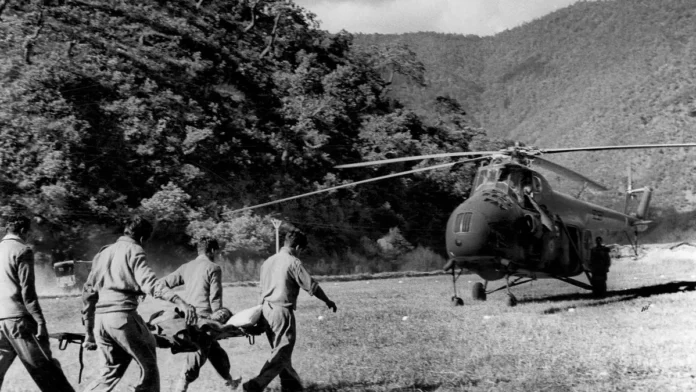
In the April edition of the Journal of Public Affairs, a thought-provoking and timely article was published, titled “Unravelling the Geopolitical Dimensions of the 1962 Sino–Indian Conflict: How the US Shaped the Sino–India Split.” This groundbreaking research, conducted by a team of esteemed scholars, delves into the intricate and often overlooked role of the United States in the historic 1962 conflict between China and India.
The article sheds light on how the involvement of the US in the Sino–Indian conflict ultimately played a significant role in shaping the geopolitical landscape of Asia. Through meticulous analysis and a comprehensive review of historical events, the authors present a compelling case for the US’s influence in the Sino–India split.
The 1962 Sino–Indian conflict is a defining moment in the history of both nations, with far-reaching consequences that continue to be felt to this day. However, the role of the US in this conflict has often been overlooked or downplayed. This article aims to rectify that by providing a comprehensive account of the US’s involvement and its impact on the Sino–India relationship.
One of the key findings of this research is that the US saw the Sino–Indian conflict as an opportunity to further its own geopolitical interests in the region. As the Cold War was raging, the US perceived China’s communist regime as a threat and saw India as a counterbalance to it. Thus, the US provided military and economic aid to India, which exacerbated tensions between India and China.
Moreover, the article also highlights how the US’s support for India in the conflict was not just limited to military aid. It also extended to diplomatic efforts, such as convincing other nations to impose economic sanctions on China. This further strained the already fragile relationship between China and India.
In addition to the US’s involvement in the Sino–Indian conflict, the article also delves into the impact of this conflict on the larger geopolitical landscape of Asia. It argues that the Sino–India split created a power vacuum in the region, which allowed the US to increase its presence and influence in Asia. This, in turn, had significant implications for the balance of power in the region and the global political order.
The authors of this article have done a commendable job of presenting a comprehensive and well-researched account of the US’s role in the Sino–Indian conflict. Through their analysis, they have not only shed light on a crucial aspect of this historic event but also provided valuable insights into the dynamics of global politics.
The implications of this research are far-reaching, as it challenges conventional narratives and presents a more nuanced understanding of the Sino–India split. It highlights the importance of considering multiple perspectives when examining significant historical events and their impact on the present.
In conclusion, the publication of this article in the Journal of Public Affairs is a significant contribution to the field of international relations and geopolitics. It offers a fresh and compelling perspective on the Sino–Indian conflict of 1962 and its impact on the regional and global political order. The findings of this research will undoubtedly fuel further discussion and debate on the role of the US in shaping international relations.