
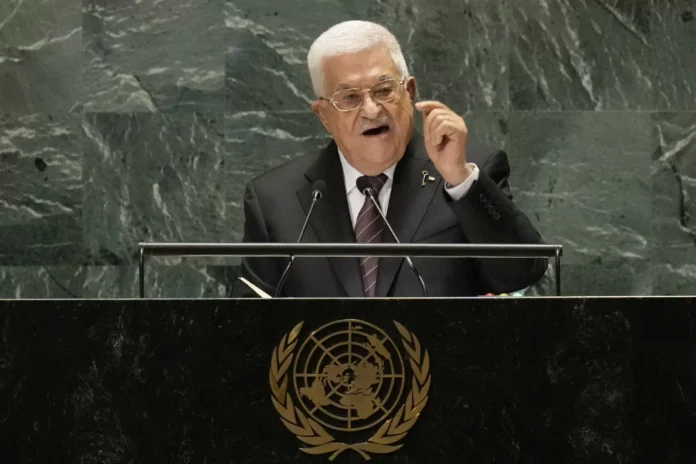
The United States has recently made a controversial decision to bar Palestinian President Mahmoud Abbas from attending the upcoming United Nations General Assembly in New York next month. This decision has sparked widespread criticism and concern from the international community, as well as from several U.S. allies who are set to attend the gathering.
The United Nations General Assembly is an annual event where world leaders come together to discuss and address global issues and challenges. It is a crucial platform for leaders to engage in dialogue, build relationships, and work towards finding solutions for the betterment of the world. Therefore, the decision to bar President Abbas from attending this important gathering is not only disappointing but also counterproductive.
President Abbas has been a key figure in the Palestinian struggle for statehood and has been a vocal advocate for the rights of his people. He has been a consistent and active participant in the United Nations General Assembly, using this platform to raise awareness about the plight of the Palestinian people and to push for a peaceful resolution to the ongoing conflict in the region.
The United States’ decision to bar President Abbas from attending the General Assembly is a clear violation of the principles of the United Nations, which promotes inclusivity and encourages all member states to participate in its meetings. This decision also goes against the spirit of diplomacy and dialogue, which are essential for resolving conflicts and promoting peace.
Furthermore, this decision sends a negative message to the Palestinian people and undermines their efforts towards achieving statehood. It also undermines the credibility of the United States as a mediator in the Israeli-Palestinian conflict. How can the U.S. claim to be an impartial mediator when it is actively barring the leader of one of the parties from participating in a crucial international gathering?
The United States has justified its decision by citing the ongoing tensions between Israel and Palestine and the lack of progress in the peace process. However, this decision only adds fuel to the fire and hinders any potential for progress. It is essential for all parties involved to come together and engage in meaningful dialogue, and the United Nations General Assembly provides the perfect platform for such discussions.
Moreover, the decision to bar President Abbas from attending the General Assembly is not only detrimental to the Palestinian cause but also to the United States’ relationships with its allies. Several U.S. allies, including European countries, have expressed their disappointment and concern over this decision. This move by the U.S. has the potential to strain its relationships with these countries and weaken its position as a global leader.
In light of these developments, it is crucial for the United States to reconsider its decision and allow President Abbas to attend the United Nations General Assembly. This decision would not only be in the best interest of the Palestinian people but also in the interest of promoting peace and stability in the region.
In conclusion, the United States’ decision to bar Palestinian President Mahmoud Abbas from attending the upcoming United Nations General Assembly is a regrettable and counterproductive move. It goes against the principles of the United Nations and undermines the spirit of diplomacy and dialogue. It is essential for the United States to reverse this decision and allow President Abbas to participate in the General Assembly, for the sake of promoting peace and stability in the region.