
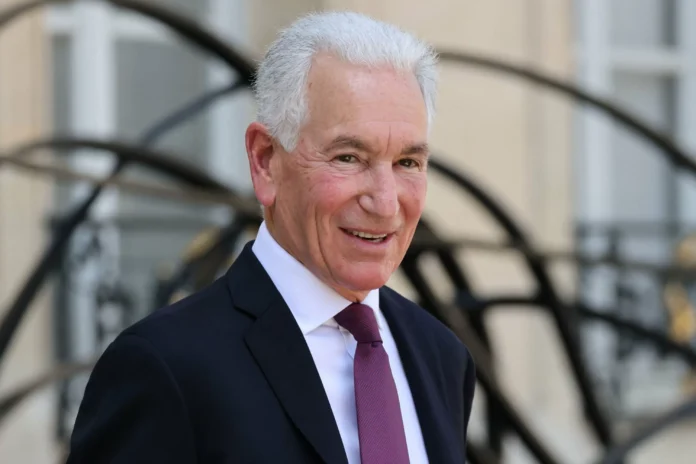
France has once again found itself at the center of a diplomatic dispute, this time with the United States. On Sunday, the French government summoned U.S. Ambassador Charles Kushner to discuss his recent letter to President Emmanuel Macron.
In the letter, Ambassador Kushner accused France of not doing enough to address the rising problem of antisemitic violence in the country. The letter specifically referenced a recent attack on a Jewish man in Paris who was wearing a kippah, a traditional Jewish head covering.
The attack, which occurred on the eve of Yom Kippur, sparked widespread outrage and raised concerns about the safety of Jewish communities in France. In his letter, Ambassador Kushner also called for stronger action to be taken against those who commit acts of violence against the Jewish community.
The French government responded to the letter by summoning Ambassador Kushner to the Ministry of Foreign Affairs in Paris. During the meeting, French officials expressed their disappointment with the accusations made in the letter and emphasized the country’s commitment to combating antisemitism.
In a statement, the French Ministry of Foreign Affairs said, “France takes the fight against antisemitism very seriously and has implemented numerous measures to ensure the safety and protection of its Jewish citizens. We reject any accusations of indifference towards this issue and will not tolerate any attempts to tarnish our efforts.”
The statement also highlighted the French government’s initiatives to combat racism and discrimination, including the creation of a national action plan against racism and antisemitism.
This diplomatic incident comes at a time when the relationship between France and the United States has been strained. From disagreements over trade to tensions in international relations, the two countries have found themselves at odds on various issues.
However, it is important to note that this incident does not reflect the overall relationship between the two nations. France and the United States have a long history of cooperation and shared values, and it is crucial that this continues to be the focus moving forward.
It is understandable that Ambassador Kushner is concerned about the safety of Jewish communities in France, as antisemitic incidents have been on the rise in recent years. However, it is important to address this issue in a constructive manner and not through accusations that could damage the strong bond between our two countries.
In fact, France and the United States have been working closely together to combat antisemitism. In July, French Interior Minister Gérald Darmanin met with U.S. Secretary of Homeland Security Alejandro Mayorkas to discuss ways to strengthen cooperation in the fight against hate crimes and extremism.
The meeting resulted in the signing of a joint declaration to strengthen the exchange of information and best practices on addressing hate crimes, including antisemitism.
Furthermore, France has taken strong measures to combat hate speech and online hate crimes, including the adoption of a new law in May that allows for the quick removal of hate speech from social media platforms.
France and the United States share a common goal of a world free from discrimination, hatred, and violence. It is through collaboration and understanding that we can achieve this goal. Instead of pointing fingers, we must continue to work together to promote mutual respect and tolerance for all individuals, regardless of their background or religion.
In conclusion, the issues raised in Ambassador Kushner’s letter must not overshadow the strong relationship between France and the United States. While there may be disagreements from time to time, it is important to approach them with a positive and productive mindset, one that is built on cooperation and mutual understanding. Let us continue to work together to combat hate and intolerance and create a better world for all.