
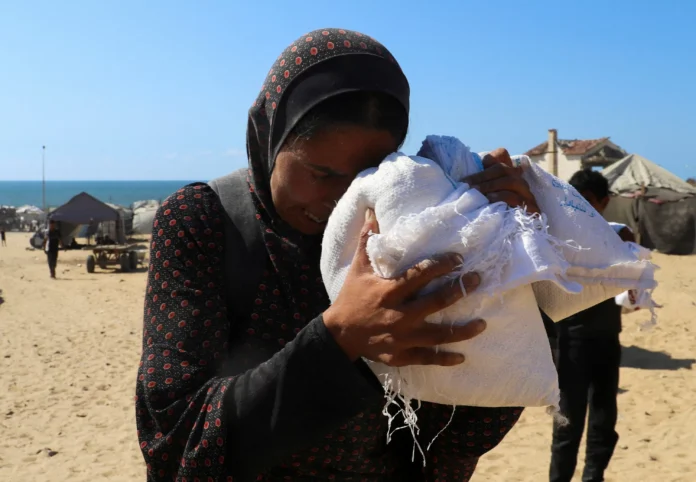
As the conflict in Gaza enters its 22nd month, the situation for civilians caught in the crossfire remains dire. The limited food aid that Israel permits into the territory is often seized by desperate civilians under fire, looted by gangs, or diverted in the chaos of war. This has created a desperate situation for many families, who are struggling to survive amidst the devastation of conflict.
The ongoing conflict between Israel and Gaza has had a devastating impact on the civilian population. The constant airstrikes and shelling have destroyed homes, schools, hospitals, and essential infrastructure, leaving thousands of families displaced and without access to basic necessities. The blockade imposed by Israel has made the situation even more dire, limiting the flow of goods and humanitarian aid into the territory.
One of the greatest challenges facing the people of Gaza is the severe shortage of food and other essential supplies. According to the United Nations, nearly 70% of the population in Gaza relies on food aid to survive. However, the limited amount of aid that is allowed into the territory is not enough to meet the growing needs of the population. As a result, many families are forced to resort to desperate measures to feed themselves and their children.
Desperation has led to the looting of aid trucks and warehouses by armed gangs, who take advantage of the chaos to steal supplies and sell them on the black market. This not only deprives those in need of essential goods but also hinders the efforts of humanitarian organizations to provide aid to those who need it most.
Moreover, the ongoing violence and insecurity have also made it challenging for aid workers to deliver aid effectively. Many aid workers have been injured or killed while trying to distribute aid, and aid convoys are often delayed or prevented from reaching their destination due to security concerns. This not only puts the lives of aid workers at risk but also hinders the delivery of much-needed aid to those who need it most.
In addition to these challenges, corruption and power struggles within Gaza have also hindered the distribution of aid. Aid intended for civilians often ends up in the hands of armed groups or political factions, who use it to gain power and control over the population. This diversion of aid not only undermines the efforts of humanitarian organizations but also contributes to the suffering of innocent civilians.
Despite these challenges, humanitarian organizations continue to work tirelessly to provide aid to those in need. Through their dedication and commitment, they have been able to reach thousands of people in Gaza and provide them with essential food, water, and medical supplies. This has been made possible through the support of governments and individuals around the world who have generously donated to humanitarian relief efforts.
It is crucial to acknowledge the efforts of Israel’s government, who have recently announced their intention to increase the amount of aid allowed into Gaza. This is a positive step towards addressing the humanitarian crisis in the territory and providing much-needed relief to those who are suffering. However, it is essential that this aid reaches the hands of those who need it most and is not diverted for political or personal gain.
In conclusion, as the conflict in Gaza continues, it is crucial to remember the plight of innocent civilians caught in the crossfire. The limited food aid that is allowed into the territory is often seized, looted, or diverted, depriving those in need of essential supplies. It is the responsibility of all parties involved to ensure that aid reaches the hands of those who need it most, and not fall prey to corruption or violence. It is only through collective efforts and a commitment to humanitarian principles that we can alleviate the suffering of innocent civilians in Gaza and bring an end to this humanitarian crisis.