
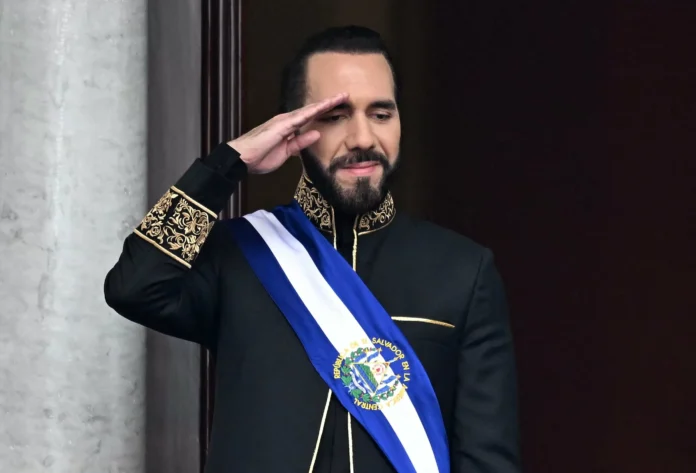
El Salvador’s Legislative Assembly passed a constitutional reform overnight, removing presidential term limits, sparking concerns that the move could allow President Nayib Bukele to hold onto power indefinitely. The decision has been met with mixed reactions, with some praising it as a necessary step towards progress, while others fear it could lead to authoritarianism.
The reform, which was passed with a two-thirds majority, allows for the president to run for re-election indefinitely, effectively removing the two-term limit that was previously in place. This move has been seen as a major victory for President Bukele, who has been pushing for this change since he took office in 2019.
Supporters of the reform argue that it will bring stability and continuity to the country, as well as give the people the opportunity to keep a leader who has brought about significant changes and progress in a short amount of time. President Bukele has been praised for his efforts in tackling corruption, reducing crime rates, and improving the economy. His popularity has only grown since the start of the COVID-19 pandemic, with his swift and decisive actions to contain the virus earning him even more support from the public.
The president himself has defended the reform, stating that it is necessary for the country to continue on its path towards development and progress. He argues that term limits only serve to hinder the country’s growth, as new leaders often have to spend their first term undoing the mistakes of their predecessors. With this reform, he believes that he can continue to implement his plans and bring about positive change for the people of El Salvador.
However, there are also concerns that this move could lead to a concentration of power in the hands of one individual, and potentially pave the way for authoritarianism. Critics of the reform argue that it goes against the principles of democracy and could lead to a lack of checks and balances on the president’s power. They also point to Bukele’s tendency to bypass the Legislative Assembly and make decisions through executive orders, which could become even more prevalent with the removal of term limits.
The international community has also expressed their concerns about the reform. The United States, a key ally of El Salvador, has stated that they are closely monitoring the situation and will continue to support democratic processes in the country. The Organization of American States (OAS) has also raised concerns about the potential implications of this move on the country’s democracy.
Despite these concerns, the reform has been met with widespread support from the public. Many see it as a necessary step towards progress and believe that President Bukele has the best interests of the country at heart. His popularity and approval ratings have only continued to rise, with many viewing him as a strong and capable leader who is bringing about positive change for the country.
In conclusion, the passing of the constitutional reform in El Salvador has sparked both praise and concern. While some see it as a necessary step towards progress, others fear it could lead to a concentration of power in the hands of one individual. Only time will tell the true implications of this decision, but for now, President Bukele remains a popular and influential leader in El Salvador.