
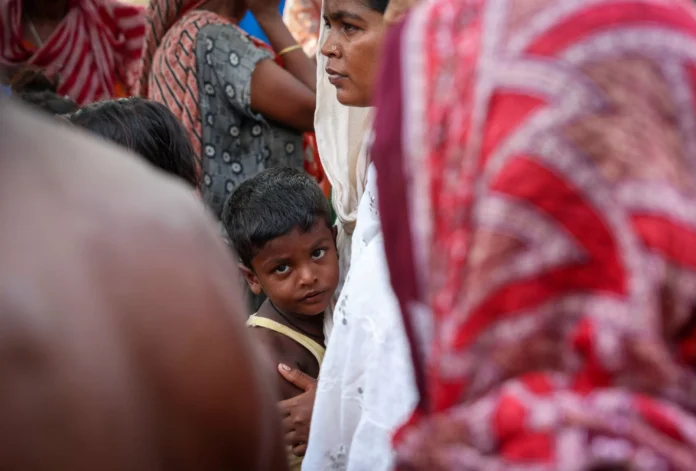
Hundreds of Muslim families in India’s northeastern Assam state are facing a dire situation as they are forced to live in makeshift tents after being evicted from their homes in a pre-election crackdown near the border. The current situation in Assam is a cause for concern as it highlights the plight of these marginalized communities and their struggle for basic human rights.
The eviction drive, which began in March, has left many families homeless and vulnerable. The government claims that these families are living in “no man’s land” and are illegal immigrants from neighboring Bangladesh. However, this claim has been met with skepticism as many of these families have been living in Assam for generations and have valid citizenship documents.
The evictions have been carried out as part of a government initiative to identify and deport illegal immigrants from Assam. This initiative, known as the National Register of Citizens (NRC), has been marred with controversy and has been criticized for targeting the Muslim community. Many fear that this is a deliberate attempt to marginalize and disenfranchise the Muslim population in Assam.
The situation has become even more dire as the country gears up for its general elections. With political parties using the issue of illegal immigration as a means to gain votes, the Muslim community in Assam has become a pawn in the political game. The evictions, which have been carried out without any proper rehabilitation plan, have left these families in a state of uncertainty and fear.
The makeshift tents that these families are living in are not equipped to withstand the harsh weather conditions in Assam. With the monsoon season approaching, the families are at risk of facing even more hardships. The lack of basic amenities such as clean water, sanitation, and healthcare facilities has also added to their woes. Children and the elderly are particularly vulnerable in this situation, with many of them falling ill due to the unhygienic living conditions.
The evictions have also taken a toll on the mental health of these families. Many of them are traumatized by the sudden loss of their homes and are struggling to cope with the uncertainty of their future. The fear of being deported to a country they have never known is a constant source of anxiety for these families.
The international community has also expressed concern over the situation in Assam. The United Nations High Commissioner for Refugees (UNHCR) has urged the Indian government to ensure that the rights of these families are protected and that they are not forcibly evicted. The UNHCR has also called for a proper verification process to be put in place to avoid the wrongful eviction of genuine citizens.
It is heartening to see that amidst all the chaos and uncertainty, there are individuals and organizations who are stepping up to help these families. Many NGOs and local community groups have come forward to provide aid and support to the evicted families. They are providing them with food, shelter, and other basic necessities, and also helping them with legal aid to fight their case.
The government must also take immediate action to address the situation in Assam. Instead of targeting a particular community, the focus should be on finding a sustainable solution that ensures the rights and well-being of all the residents of Assam. The evicted families must be given a fair chance to prove their citizenship and should not be deprived of their basic human rights.
In conclusion, the current situation in Assam is a cause for concern and highlights the need for a more inclusive and compassionate approach towards dealing with issues of illegal immigration. It is time for the government to take a proactive stance and work towards finding a solution that upholds the rights of all its citizens, regardless of their religion or ethnicity. Let us hope that the evicted families in Assam will soon be able to return to their homes and live in peace and harmony.