
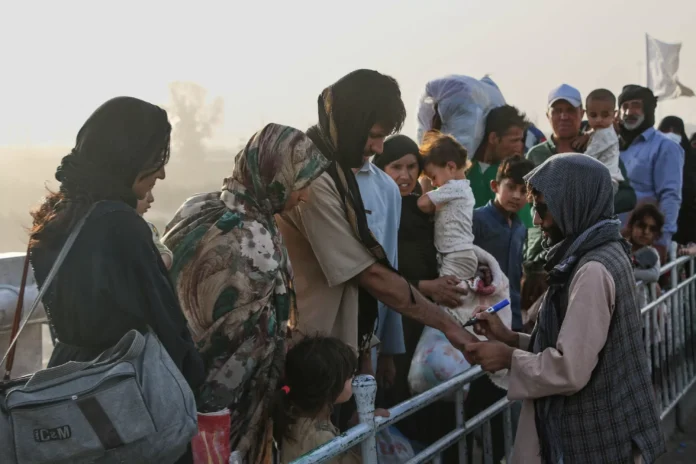
The United Nations (U.N.) has recently accused the Taliban of committing serious human rights violations against Afghan refugees who have been forcefully returned to their home country from neighboring Pakistan and Iran. This alarming revelation has sparked global concerns and drawn attention to the dire situation facing Afghan refugees.
According to the U.N. Refugee Agency (UNHCR), Pakistan and Iran are among the top hosting countries for Afghan refugees, with an estimated 2.7 million and 1.5 million refugees respectively. However, due to the ongoing conflict in Afghanistan and increasing pressure from host countries, many of these refugees have been forced to return to their home country.
The U.N. has raised concerns that the Taliban has been targeting these returning refugees, subjecting them to gross human rights violations. These include arbitrary detention, torture, sexual violence, and even executions. Many refugee returnees have reported being forcibly taken by the Taliban from their homes and facing severe retribution for seeking asylum in other countries.
The situation is particularly dire for women and children, who are the most vulnerable in these circumstances. UNHCR’s spokesperson Andrej Mahecic stated that “women and girls returning from neighboring countries face serious protection risks, including gender-based violence and forced marriage.”
The U.N. has also emphasized that these human rights violations are not limited to returning refugees but also affect internally displaced persons (IDPs) within Afghanistan. The IDPs often have limited access to basic services and are forced to live in overcrowded and unsafe conditions. They are also at risk of being targeted by armed groups, including the Taliban.
The U.N. has called on the Taliban to immediately halt these human rights violations and respect international law. The Taliban must ensure the safety and security of returning refugees and IDPs, and allow them to rebuild their lives without any fear or intimidation.
It is crucial for the international community to support the U.N.’s efforts in addressing this issue and to provide necessary aid to Afghan refugees. The U.N. has appealed for $1.3 billion in humanitarian assistance to help 16 million people in Afghanistan, including returning refugees and IDPs.
Moreover, neighboring countries such as Pakistan and Iran must also play a significant role in protecting Afghan refugees. They must ensure that their forced return is only carried out when conditions in Afghanistan are safe and dignified.
In response to the U.N.’s accusations, the Taliban has denied any wrongdoing and has instead blamed the Afghan government for the dire conditions facing returning refugees. This highlights the urgent need for the Afghan government to take concrete steps in addressing the root causes of conflict and promoting peace and stability in the country.
In this critical situation, the international community must continue to put pressure on the Taliban to respect human rights and prioritize the protection of civilians. The U.N. has taken a significant step in shedding light on the plight of Afghan refugees, but further action is needed to hold the Taliban accountable for their actions.
It is imperative that the U.N. and other international organizations work together with the Afghan government to provide necessary support and resources for returning refugees and IDPs. This includes providing access to education, healthcare, and livelihood opportunities to enable them to rebuild their lives.
In conclusion, the U.N.’s accusations against the Taliban highlight the urgent need for global attention and action to protect the rights of Afghan refugees and IDPs. It is crucial for all parties to work together to create a safe and stable environment for returning refugees and ensure that their basic human rights are respected and protected. Let us continue to stand in solidarity with Afghan refugees and support the U.N.’s efforts in promoting peace and stability in Afghanistan.