
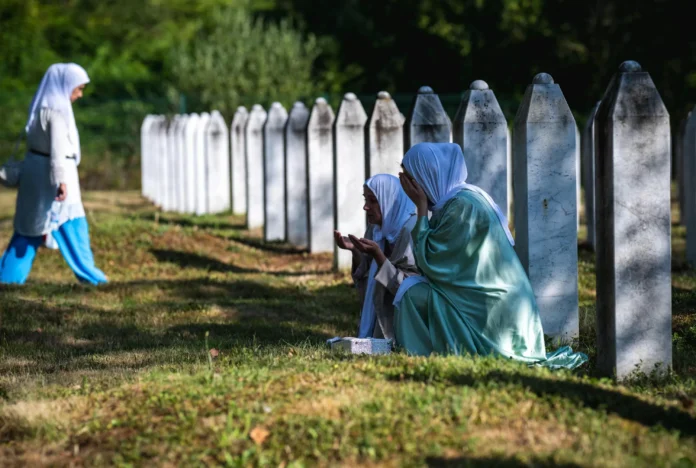
Thousands from Bosnia-Herzegovina and around the world gathered in Srebrenica to commemorate the 30th anniversary of the 1995 massacre in which more than 8,000 Bosniak Muslim men and boys were brutally killed. The event, held on July 11th, was a somber yet powerful reminder of the atrocities that occurred during the Bosnian War and a call for justice and remembrance.
Srebrenica, a small town in eastern Bosnia-Herzegovina, holds a significant place in the country’s history. It was the site of the worst massacre in Europe since World War II, where Bosnian Serb forces systematically killed thousands of Bosniak men and boys in an act of genocide. The massacre, which took place during the Bosnian War, was a dark chapter in the country’s history and a painful reminder of the consequences of hatred and intolerance.
The 30th anniversary of the Srebrenica massacre was marked with a series of events, including a memorial service and a funeral for the newly identified victims. The service was attended by thousands of people, including survivors, family members of the victims, and international dignitaries. The atmosphere was one of grief and remembrance, as people paid their respects to the victims and honored their memory.
One of the most moving moments of the event was the funeral procession, where the remains of 19 newly identified victims were carried to their final resting place. The procession was led by a group of women known as the “Mothers of Srebrenica,” who have been tirelessly fighting for justice and remembrance for their loved ones. Their strength and determination were a testament to the resilience of the Bosniak community and a reminder that their loved ones will never be forgotten.
The memorial service was also attended by international leaders, including the President of Turkey, Recep Tayyip Erdogan, and the President of Croatia, Zoran Milanovic. In his speech, President Erdogan emphasized the importance of remembering the victims and holding those responsible for the massacre accountable. He also called for unity and solidarity among the people of Bosnia-Herzegovina, regardless of their ethnic or religious background.
The 30th anniversary of the Srebrenica massacre was also marked by the unveiling of a new memorial complex, which includes a cemetery and a museum. The cemetery, known as the “Valley of the Fallen,” is the final resting place for more than 6,600 identified victims of the massacre. The museum, on the other hand, serves as a reminder of the events that took place in Srebrenica and a tribute to the victims and their families.
The memorial complex is a symbol of the country’s commitment to remembering the victims and honoring their memory. It is also a powerful message to the world that the people of Bosnia-Herzegovina will never forget the atrocities that occurred in Srebrenica and will continue to fight for justice and remembrance.
The 30th anniversary of the Srebrenica massacre was not only a time for remembrance but also a call for justice. The International Criminal Tribunal for the former Yugoslavia (ICTY) has already convicted several individuals for their role in the massacre, including the former Bosnian Serb leader, Radovan Karadzic. However, many perpetrators are still at large, and the families of the victims are still waiting for justice to be served.
The event also served as a reminder that the wounds of the Bosnian War are still fresh, and the country is still struggling to heal and move forward. The international community must continue to support Bosnia-Herzegovina in its efforts to achieve reconciliation and justice for the victims of the war.
In conclusion, the 30th anniversary of the Srebrenica massacre was a powerful and emotional event that brought together people from all over the world to remember the victims and honor their memory. It was a reminder that we must never forget the atrocities that occurred in Srebrenica and that we must continue to fight for justice and remembrance. As we move forward, let us remember the victims and their families and work towards a future where such tragedies never happen again.