
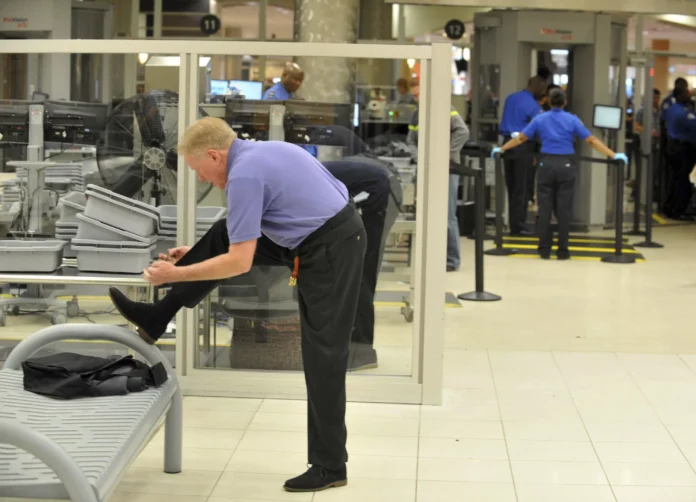
For the first time in nearly two decades, U.S. airport travelers may soon be able to breeze through security screenings without having to remove their shoes. This exciting news comes from the Transportation Security Administration (TSA), who is considering implementing new security measures that would allow passengers to keep their shoes on during airport screenings.
The idea of keeping shoes on during airport security screenings is not a new one. In fact, it has been a topic of discussion for many years now. However, due to concerns about potential threats and the need for thorough security checks, the TSA has always required travelers to remove their shoes before proceeding through the screening process.
But now, thanks to advancements in technology and security procedures, the TSA is exploring the possibility of allowing passengers to keep their shoes on while still ensuring the safety of all travelers. This is a major development that has the potential to greatly improve the overall airport experience for millions of passengers.
One of the main reasons for the change is the introduction of new body scanners that are more effective at detecting potential threats. These scanners use advanced imaging technology to create a detailed image of a person’s body, allowing security personnel to identify any suspicious items that may be hidden on a person’s body, including their shoes.
In addition, the TSA is also looking into implementing more targeted and intelligence-driven security measures, rather than relying solely on blanket screening procedures. This means that passengers who pose a lower risk, such as children and elderly travelers, may be able to keep their shoes on during screenings.
The potential benefits of this change are immense. Not only will it save travelers the hassle of having to remove their shoes and put them back on, but it will also speed up the overall screening process, reducing wait times and improving the flow of passengers through security checkpoints. This is especially important during peak travel times when long lines and delays can cause stress and frustration for passengers.
Furthermore, keeping shoes on during screenings will also improve hygiene and reduce the risk of spreading germs. Let’s face it, airport floors are not the cleanest, and having to walk barefoot or in socks can be unhygienic and uncomfortable. Allowing passengers to keep their shoes on will help maintain a more sanitary environment for everyone.
This potential change in airport security procedures has been met with an overwhelmingly positive response from both travelers and industry experts. Many frequent flyers have expressed their excitement at the prospect of not having to remove their shoes, while also acknowledging the importance of maintaining strict security measures.
In addition, the potential savings in time and resources for the TSA cannot be overlooked. With an estimated 1.8 million passengers passing through U.S. airports every day, the time and effort saved by not having to screen each passenger’s shoes can add up significantly.
Of course, there are still some concerns that need to be addressed before this change can be fully implemented. One of the main concerns is the potential for the scanners to create privacy issues. However, the TSA has assured that these scanners do not produce detailed images of a person’s body and that the privacy of passengers will be respected.
In conclusion, the potential change in airport security measures to allow passengers to keep their shoes on during screenings is a major step forward in improving the overall airport experience. It will not only save time and improve hygiene, but it will also demonstrate the TSA’s commitment to finding more efficient and effective ways to ensure the safety of all travelers. Let’s hope that this change becomes a reality soon, making our travels through U.S. airports a little bit easier and more comfortable.