
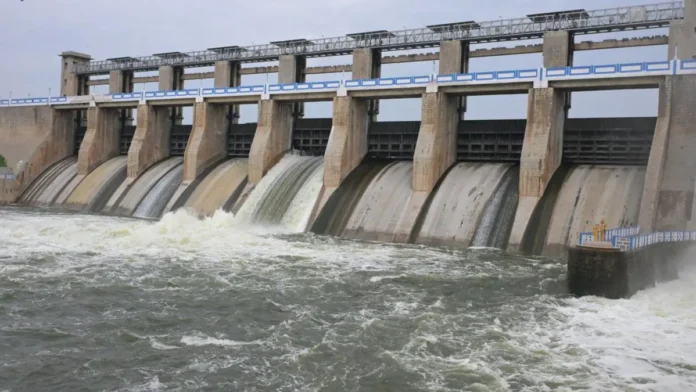
The monsoon season in India has brought much-needed relief to the country, with an excess of 12 per cent rainfall recorded this year. This has been a welcome change after the past few years of drought and water scarcity. The heavy downpour has not only replenished the parched land but has also filled up reservoirs, providing much-needed water for irrigation and domestic use.
According to the Central Water Commission, five major reservoirs in the country have reached their maximum capacity, which is a significant improvement from the previous years. These reservoirs are located in the states of Maharashtra, Karnataka, Andhra Pradesh, and Tamil Nadu, which have been facing severe water shortages. The excess rainfall has also helped in raising the water levels in other reservoirs, bringing much-needed relief to many parts of the country.
The excess monsoon rainfall has been a blessing for the agricultural sector, which has been struggling due to the drought in the past few years. The heavy rainfall has provided much-needed moisture to the soil, which will help in the growth of crops. This will not only benefit the farmers but will also have a positive impact on the economy of the country. The increased water levels in the reservoirs will also ensure that there is enough water for irrigation, which will help in increasing the yield of crops.
Apart from agriculture, the excess rainfall has also been beneficial for the domestic water supply. Many cities and towns in India have been facing acute water shortages, and the heavy downpour has helped in replenishing the water sources. The filled reservoirs will ensure that there is enough water for domestic use, which will bring relief to the citizens. This will also reduce the burden on groundwater sources, which have been depleting at an alarming rate.
The excess monsoon rainfall has also been a boon for the environment. The heavy downpour has helped in reviving the flora and fauna, which were suffering due to the drought. The increased water levels in the reservoirs have also provided a habitat for aquatic animals, which were struggling to survive in the dry conditions. This will have a positive impact on the biodiversity of the country.
The excess rainfall has also brought relief to the power sector. Many hydroelectric power plants were facing a shortage of water, which affected their power generation capacity. With the increased water levels in the reservoirs, these power plants will be able to generate more electricity, which will help in meeting the energy demands of the country. This will also reduce the dependence on fossil fuels, which will have a positive impact on the environment.
The excess monsoon rainfall has not only brought relief to the country but has also highlighted the importance of water conservation. It is essential to manage our water resources efficiently and use them judiciously to avoid future water crises. The government and citizens must work together to implement effective water conservation measures and ensure that the excess rainfall is not wasted.
In conclusion, the 12 per cent excess monsoon rainfall has been a blessing for India. It has helped in replenishing the water sources, providing relief to the agricultural sector, domestic water supply, and the environment. The filled reservoirs have also brought relief to the power sector and highlighted the importance of water conservation. Let us make the most of this excess rainfall and work towards a sustainable future for our country.