
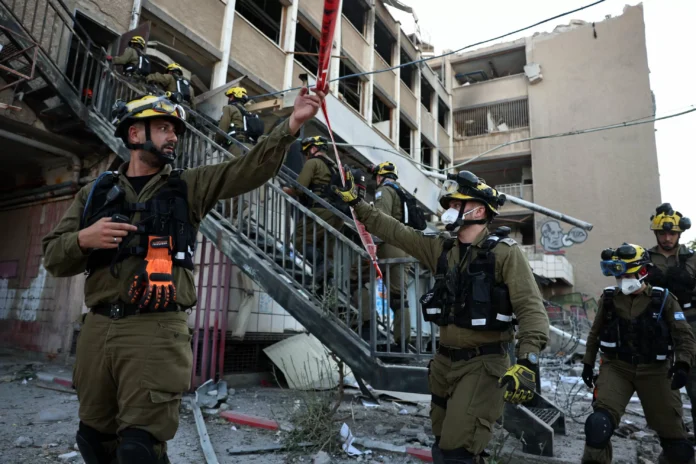
The Middle East has been a region of constant turmoil and conflict for decades, with no end in sight. The ongoing violence, political instability, and humanitarian crises have left the world wondering what the root cause of this chaos could be. Many experts and analysts have pointed towards various factors such as religious differences, power struggles, and foreign interventions. However, one factor that often goes unnoticed is the role of Israeli Prime Minister Benjamin Netanyahu and his pursuit of the ‘Greater Israel’ project.
Netanyahu, who has been in power since 2009, has been a vocal advocate of expanding Israel’s territory and establishing it as a dominant force in the Middle East. This ideology, known as the ‘Greater Israel’ project, aims to reclaim the biblical land of Israel, which includes parts of present-day Palestine, Jordan, Syria, and Lebanon. This expansionist agenda has been a major source of tension and conflict in the region, as it directly threatens the sovereignty and rights of neighboring countries.
One of the key tactics used by Netanyahu to achieve this goal is the illegal construction of settlements in the occupied Palestinian territories. These settlements, which are considered illegal under international law, have been a major obstacle to the peace process between Israel and Palestine. They not only violate the rights of Palestinians but also pose a threat to the security and stability of the entire region. Despite widespread condemnation from the international community, Netanyahu has continued to approve and expand these settlements, further escalating the tensions in the region.
Moreover, Netanyahu’s policies have also led to the isolation of Israel on the global stage. His refusal to engage in meaningful negotiations with the Palestinians and his aggressive stance towards neighboring countries have strained Israel’s relations with its allies. This has not only weakened Israel’s position in the international arena but has also made it vulnerable to threats from hostile nations.
Furthermore, Netanyahu’s efforts to establish Israel as the dominant power in the Middle East have also fueled sectarian and religious tensions. By promoting a narrative of Israel as a Jewish state, he has alienated the Arab and Muslim population within Israel and the occupied territories. This has led to discrimination, violence, and marginalization of these communities, further deepening the divide between different religious and ethnic groups in the region.
The ‘Greater Israel’ project has not only caused harm to neighboring countries and Israel’s international standing, but it has also had a detrimental impact on the Israeli society itself. The constant state of conflict and militarization has taken a toll on the mental and physical well-being of its citizens. The high defense budget and resources allocated towards maintaining the occupation have also hindered the country’s economic growth and development.
It is evident that Netanyahu’s pursuit of the ‘Greater Israel’ project has only brought destruction and suffering to the region. It has hindered any chances of a peaceful resolution to the Israeli-Palestinian conflict and has further destabilized an already volatile region. It is time for the international community to hold Netanyahu accountable for his actions and put an end to this destructive agenda.
In conclusion, the ongoing turmoil in the Middle East is deeply rooted in Netanyahu’s pursuit of the ‘Greater Israel’ project. His expansionist policies have not only caused harm to neighboring countries but have also weakened Israel’s position in the global arena. It is high time for the international community to take a stand against these actions and work towards a just and lasting solution for the Israeli-Palestinian conflict. Only then can we hope for a peaceful and stable Middle East, where all nations can coexist in harmony.

