
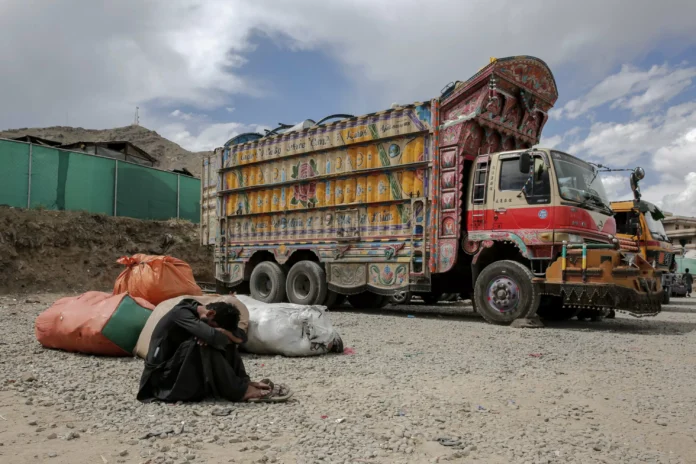
Over 200,000 Afghans have been forced to flee their homes in Pakistan since April, as authorities have resumed a strict deportation campaign. This news was confirmed by the Interior Ministry on Wednesday, highlighting the dire situation faced by Afghan refugees in the country.
Pakistan has been hosting millions of Afghan refugees for decades, providing them with shelter and basic necessities. However, in recent years, the country has been facing its own security and economic challenges, leading to increased pressure on the government to address the issue of Afghan refugees.
In order to address these challenges, the Pakistani government has launched a strict campaign to deport Afghan refugees who are living in the country without proper documentation. This campaign, which was suspended for a few months due to the COVID-19 pandemic, has now been resumed, resulting in the mass exodus of over 200,000 Afghans.
The Interior Ministry has stated that the majority of these refugees were living in the Khyber Pakhtunkhwa province, which shares a border with Afghanistan. The province has been a hub for Afghan refugees for many years, with many of them living in makeshift camps or in urban areas.
The deportation campaign has caused panic and fear among the Afghan refugee community in Pakistan. Many of them have been living in the country for decades, and have built their lives and businesses there. For them, being forced to leave their homes and return to a war-torn country is a nightmare.
According to the United Nations High Commissioner for Refugees (UNHCR), there are currently 1.4 million registered Afghan refugees in Pakistan. However, it is estimated that there are an additional 1 million unregistered refugees living in the country. These refugees have been living in Pakistan for decades, with many of them being born and raised there.
The Pakistani government has stated that the deportation campaign is necessary to address security concerns and to regulate the influx of refugees into the country. However, this has raised concerns among human rights organizations, who argue that the refugees should not be forcibly deported and that their rights should be protected.
The UNHCR has also expressed concern over the situation, stating that the deportations could result in a humanitarian crisis. The organization has called on the Pakistani government to ensure that the deportations are carried out in a humane and voluntary manner, and that the refugees are not forced to return to a country where their safety and well-being cannot be guaranteed.
The Afghan government has also raised its voice against the deportation campaign, stating that it is not able to accommodate such a large number of returnees. Afghanistan is currently facing its own challenges, with ongoing conflict and a struggling economy. The sudden influx of over 200,000 refugees will only add to the burden on the country.
In light of these concerns, it is important for both the Pakistani and Afghan governments to work together to find a sustainable solution for the Afghan refugees. The international community should also play a role in supporting both countries in addressing this issue.
It is also crucial for the international community to understand the plight of Afghan refugees and to provide them with the necessary support. These refugees have been living in Pakistan for decades, and many of them have no home to return to in Afghanistan. It is our moral responsibility to ensure that their rights and well-being are protected.
In conclusion, the recent deportation of over 200,000 Afghan refugees from Pakistan is a concerning development. It is important for the Pakistani government to address its security and economic challenges, but it should not come at the cost of forcibly displacing innocent refugees. It is time for all stakeholders to come together and find a sustainable solution for the Afghan refugee crisis. Let us not forget our duty towards our fellow human beings, and let us work towards a more compassionate and humane world.