
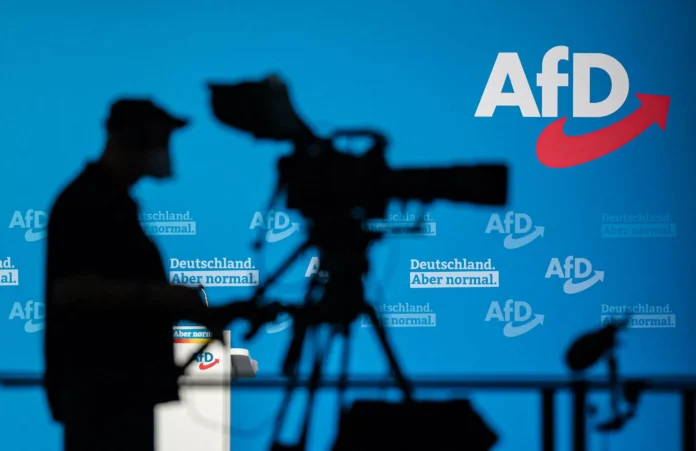
Germany’s far-right AfD party has recently made headlines by announcing that it will be suing the country’s domestic intelligence agency over its classification as a “right-wing extremist” group. This move has sparked controversy and debate within the country, as the AfD claims that this label has caused them to face discrimination and hindered their political activities. However, the decision by the party to take this legal action has also raised concerns about the rise of right-wing extremism in Germany.
The Alternative für Deutschland (AfD) party, which translates to “Alternative for Germany”, was founded in 2013 with a focus on opposing the European Union and advocating for a more conservative agenda. In the 2017 federal election, the party became the third-largest political force in Germany, with an anti-immigration and anti-Muslim stance. However, in recent years, the AfD has faced numerous controversies, including instances of hate speech and links to neo-Nazi groups.
The party’s decision to sue the domestic intelligence agency, known as the Office for the Protection of the Constitution (BfV), is based on the agency’s classification of the AfD as a “right-wing extremist” group in early 2019. This label has serious implications, as it enables the BfV to monitor the party’s activities and potentially even impose restrictions on its members.
The AfD argues that this classification is unfounded and politically motivated, and that it has hindered the party’s ability to freely engage in political discourse and influence public opinion. They also claim that the BfV’s decision is based on biased and outdated information, as the agency has not conducted a new investigation since 2019.
However, the BfV has defended its classification of the AfD, citing concerns about the party’s ties to far-right extremist groups, as well as instances of hate speech and anti-Semitic views expressed by some of its members. The agency also points out that the AfD’s own political program contains elements that contradict the German constitution, including the promise to close mosques and ban the teaching of Islam in schools.
This legal battle between the AfD and the BfV is just one example of the tension surrounding the rise of right-wing extremism in Germany. According to a 2020 report by the German Interior Ministry, there has been a significant increase in right-wing extremist crimes and violence in recent years. This rise is particularly concerning given Germany’s dark history of right-wing extremism and the atrocities committed by the Nazi party during World War II.
Therefore, it is understandable that the BfV is taking a cautious approach towards the AfD and other far-right groups. The agency’s duty is to protect the German constitution and its values, and any organization or individual that poses a threat to these principles must be monitored and potentially restricted.
It is also worth noting that this legal action by the AfD raises questions about their true intentions. By challenging the BfV’s classification, the party seems to be seeking validation and legitimacy for their controversial views. Perhaps this move is an attempt to attract more voters and portray themselves as unjustly labeled victims rather than a radical party with dangerous ideologies.
The German public and international community have been closely watching this dispute between the AfD and the BfV. Many fear that this legal battle could have serious consequences for the country’s political landscape and society as a whole. However, it is important to remind ourselves that Germany is a country bound by democracy and the rule of law. The AfD has the right to challenge the BfV’s classification and present their case in court, and the BfV has the responsibility to uphold the law and protect the country from extremist threats.
In the end, this legal dispute will determine the future of the AfD and its role in German politics. However, it is vital for society as a whole to continue promoting tolerance, diversity, and respect for human rights. As a nation still healing from its dark past, Germany must remain vigilant and reject any ideologies that promote hatred and division.
In conclusion, the announcement by Germany’s far-right AfD party to sue the country’s domestic intelligence agency has sparked important discussions about the rise of right-wing extremism in the country. While the party’s actions should be taken seriously, it is also crucial to remember the BfV’s duty to protect the German constitution and its citizens. Ultimately, this legal battle may serve as a wake-up call for the country to continue to actively combat any form of extremism and