
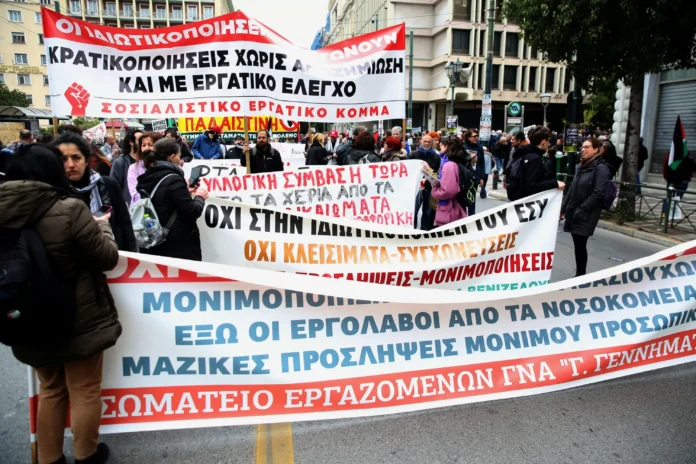
Greece was brought to a standstill on Wednesday as a nationwide strike organized by major trade union federations brought the country to a halt. The strike, which was called in response to proposed labor reforms by the government, resulted in the paralysis of transportation, disrupted travel plans, and drew thousands of protestors to the streets.
The strike was called by the two largest trade union federations, the General Confederation of Greek Workers (GSEE) and the Civil Servants’ Confederation (ADEDY). Their call for a 24-hour strike was widely supported by workers from various sectors, including public transport, healthcare, education, and the private sector. The strike also received support from students and pensioners, who joined the protests in solidarity.
The main reason for the strike was the proposed labor reforms by the government, which the trade unions claim will further erode workers’ rights and job security. The reforms aim to make it easier for employers to hire and fire employees, reduce the minimum wage, and weaken collective bargaining rights. The trade unions argue that these reforms will only benefit big businesses, while workers will be left vulnerable and without job security.
As a result of the strike, public transport services, including buses, trains, and ferries, came to a complete halt. This caused major disruptions for commuters and travelers, as many were unable to reach their destinations. Flights were also affected, with some being canceled or delayed due to the strike. Hospitals and medical facilities operated with minimal staff, while many schools and universities remained closed.
Despite the inconvenience caused by the strike, thousands of people took to the streets to voice their opposition to the proposed reforms. The demonstrations were peaceful, but the message was clear – the people of Greece will not stand by and allow their rights to be taken away. The protestors held banners and chanted slogans, demanding that the government listens to their concerns and reconsider the proposed reforms.
The strike also received attention from international media, with many highlighting the ongoing economic struggles of Greece and its citizens. The country has been grappling with a debt crisis for years, which has resulted in austerity measures and widespread unemployment. The trade unions argue that the proposed labor reforms will only worsen the situation for the already struggling Greek population.
Many experts believe that the strike could have a significant impact on the government’s decision to go through with the proposed reforms. The trade unions have warned that if their demands are not met, they will continue to organize strikes and protests in the future. This could pose a major challenge for the government, as they try to push through these reforms in the face of widespread opposition from the people.
In conclusion, the nationwide strike in Greece was a powerful display of unity and solidarity among workers from all sectors. It sent a strong message to the government that the people will not stand by and watch their rights being taken away. The strike may have caused inconvenience for some, but it was a necessary step in protecting the interests of Greek workers. It is now up to the government to listen to the people’s demands and work towards finding a solution that benefits both workers and businesses.